Flatwork Designed for Freeze-Thaw Durability
Concrete Work in Toledo for driveways and walkways subjected to winter salt exposure and temperature cycling
Winter freeze-thaw cycles test every concrete surface across Toledo, causing scaling, cracking, and structural failure in flatwork that wasn't mixed, poured, or finished correctly for regional conditions. Driveways develop spalling where deicing salts penetrate the surface, walkways settle unevenly as soil beneath shifts with frost heave, and patio slabs crack along joints that weren't properly placed to control expansion. Lateral Decks handles residential and commercial concrete work throughout the area, selecting material specifications and finishing techniques that account for Ohio's seasonal temperature swings and moisture exposure. Properties in Sylvania, Holland, Waterville, and Maumee require proper subbase preparation and reinforcement placement to prevent the premature failures common in work performed without attention to regional demands.
The concrete process involves excavation to stable subgrade, compacted aggregate base installation, reinforcement mesh or rebar placement, and pour scheduling during appropriate weather windows when temperatures support proper hydration and curing. Mix design includes air entrainment to resist freeze-thaw damage, and finishing techniques produce surfaces that shed water without trapping moisture that accelerates deterioration.
Schedule a site assessment to review your concrete needs and determine the scope required for long-term performance.
How Concrete Work Addresses Regional Failure Patterns
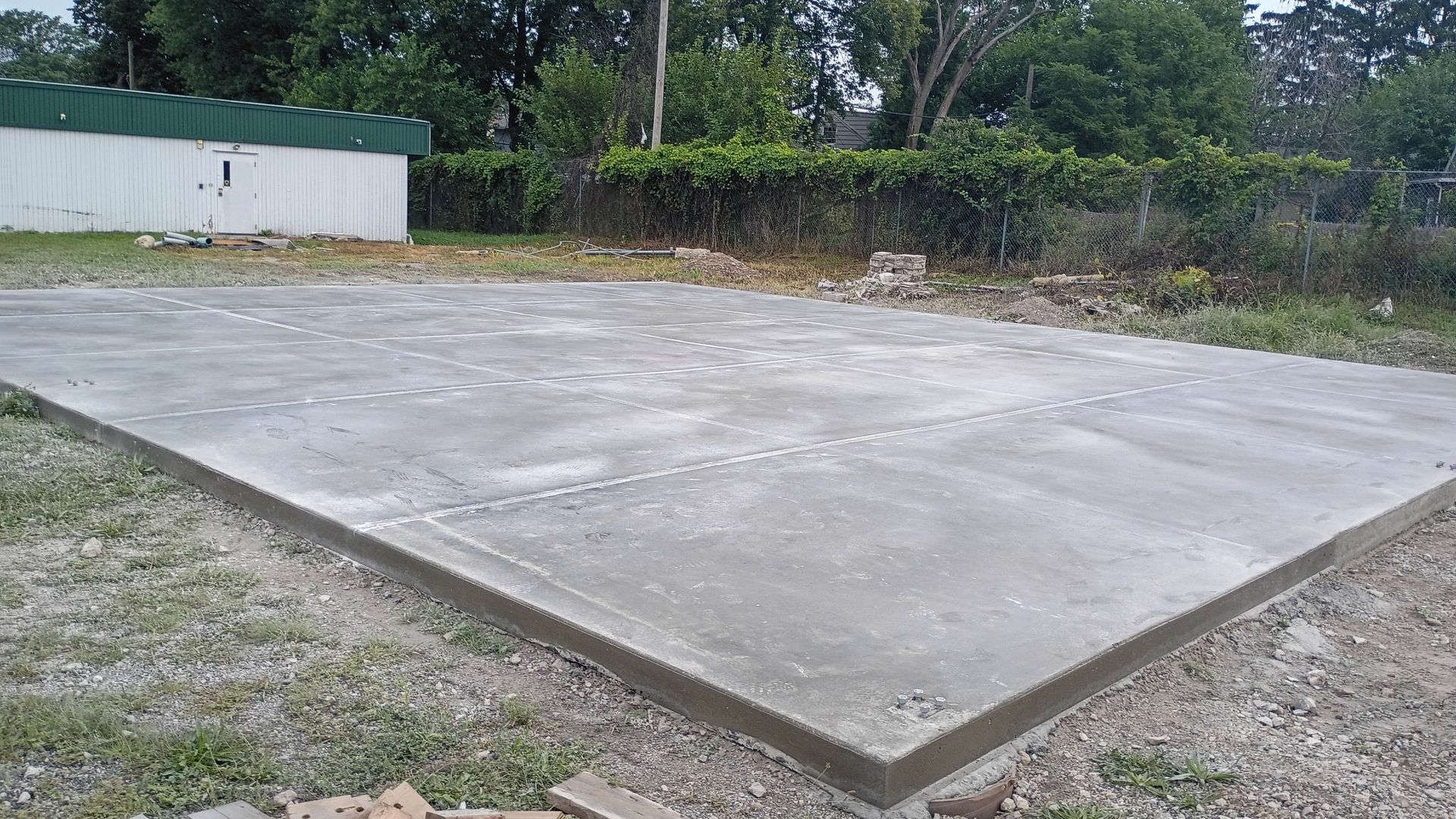
Proper concrete work begins below the visible surface—subgrade is excavated to remove organic material and unstable soil, then replaced with compacted aggregate that drains water and resists frost heave. Reinforcement is positioned at mid-depth in the slab to control cracking, and control joints are cut or formed at intervals that accommodate thermal expansion without random fractures. Pour timing avoids temperature extremes that prevent proper curing, and finishing includes appropriate surface texture for traction without excessive roughness that traps water and debris.
Finished flatwork is level without settled sections, drains water away from foundations and structures, and remains intact through seasonal freeze-thaw cycles without surface scaling or structural cracks. Lateral Decks completes work that maintains its appearance and function for years rather than showing wear within the first few winters, a common outcome when mix design or finishing technique ignores local climate demands.
Concrete projects also address grading and drainage issues that contribute to premature failure—slabs are sloped to direct water away from buildings, downspout discharge points are positioned to prevent undermining, and adjacent landscaping is graded to avoid pooling against the concrete. These considerations prevent water infiltration that causes cracking and heaving during freeze cycles.
Questions Before Starting Your Project
Concrete work involves permanent installation with long curing periods, so property owners typically want clarity on process, timing, and material choices before committing.
What makes concrete mixes suitable for Toledo's climate?
Air entrainment is added to create microscopic voids that allow water to expand during freezing without cracking the concrete, a critical specification for durability in regions with repeated freeze-thaw cycles like Northwest Ohio.
How long does concrete take to cure fully?
Surface curing sufficient for light foot traffic occurs within a few days, but full structural curing requires approximately 28 days, during which heavy loads and deicing salt exposure should be avoided to prevent surface damage.
Why do driveways crack even with proper installation?
Control joints are intentionally placed to direct cracking along planned lines rather than allowing random fractures, so some visible cracks are expected and designed into the work—uncontrolled cracking indicates subbase failure or inadequate reinforcement.
When is the best time to pour concrete in Toledo?
Spring through fall provides optimal temperatures for proper hydration and curing, though work can proceed during mild winter periods if temperatures remain above freezing long enough for initial set and protection measures are in place.
Can existing concrete be repaired or does it need full replacement?
Minor surface scaling and isolated cracks can be patched or resurfaced, but extensively settled or structurally failed slabs require removal and replacement to address underlying subbase problems that caused the original failure.
Lateral Decks handles concrete projects from site preparation through final finishing, currently booking jobs alongside deck installations and managing both small residential work and larger commercial bids. Request a detailed estimate based on your site conditions, project scope, and material requirements specific to your property.